Key takeaways
- The Chatbot Era Is Over, apply this before building anything.
- Why OpenClaw Won and what to do about it.
- The Consolidation Is Already Happening, apply this before building anything.
- What Agents Actually Change.
- The Skills Revolution, apply this before building anything.
The big AI story this year isn’t about model sizes or benchmark scores. It’s about agents. And the clearest proof point is OpenClaw.
A few months ago, OpenClaw was a weekend project from Peter Steinberger. It’s now hitting 300K to 400K monthly active users. And not because it’s a better chatbot. Because it does things. It doesn’t just talk, it executes. And that distinction is going to reshape enterprise AI over the next decade.
I want to walk you through why OpenClaw’s success tells us where AI is headed, what it means for your business, and what you need to understand about the agent-first future we’re moving into.
The Chatbot Era Is Over
Let me set the stage. For the last two years, the dominant approach has been: AI is a chatbot. You talk to it. It talks back. You ask it to write an email, summarize a document, explain a concept. It does those things. They were useful, genuinely useful, but they required human judgment to translate into action.
If you wanted to automate something, you still needed either a human in the loop or glue code connecting the AI to your systems. A chatbot could draft a customer support response, but a human had to review and send it. A chatbot could summarize data, but a human had to extract it, organize it, and load it into the database.
That model works. It’s safe. It’s controllable. And it’s inefficient if you need to run thousands of operations daily at scale.
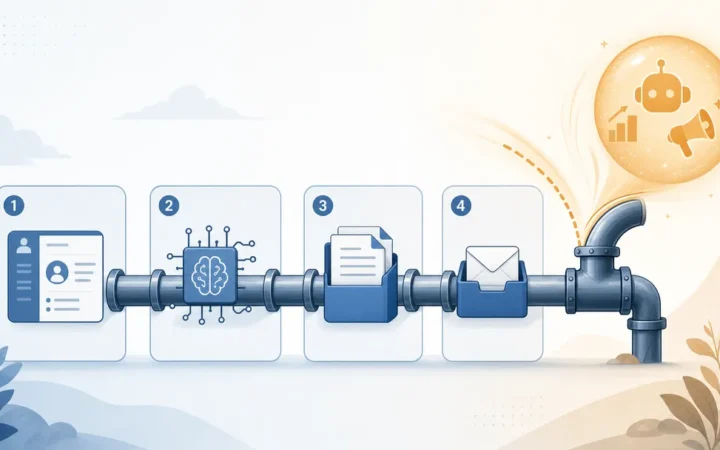
Enter agents. An agent doesn’t just talk. It perceives its environment, understands what needs to happen, makes decisions, and executes them autonomously. Not perfectly. Not without guardrails. But autonomously.
That’s not a small shift. That’s a fundamental reimagining of what AI does in an organization.
Why OpenClaw Won
OpenClaw’s success isn’t random. It’s a direct result of the architecture Steinberger chose. And now that he’s at OpenAI, we’re going to see similar principles become the industry standard.
The SOUL.md and HEARTBEAT.md framework is the core insight. These aren’t just features, they’re philosophy. SOUL defines the agent’s purpose and values. HEARTBEAT is the agent’s decision-making process, its reasoning loop. Instead of a chatbot that responds to queries, you have a system that understands what it’s supposed to accomplish and works toward that goal autonomously.
The Skills system is equally important. Rather than expecting one model to be good at everything, OpenClaw lets you compose agents from specialized capabilities. Need an agent that reads documents? Attach the Document Reader skill. Need it to integrate with your database? Attach the Database skill. It’s modular, composable, and practical.
And because it’s open-source, people trusted it. Enterprises tend to be skeptical of closed black boxes, but an open-source agent? They can audit it, modify it, integrate it into their own infrastructure. That trust translated into adoption.
Practical tip: When you’re evaluating any AI agent platform, ask about the skill system first. Can you extend it? Can you add your own capabilities? If the answer is no, you’re buying a closed platform that can’t grow with your needs.
The Consolidation Is Already Happening
Here’s what’s fascinating about Peter Steinberger moving to OpenAI: it signals where the market is consolidating. OpenAI’s acquisition of GPT-4 reasoning, their agent work, their deployment infrastructure, they’re building toward a world where agents are core products, not features.
I expect we’ll see similar moves. Anthropic is already pushing Claude Code and Claude Cowork in this direction. Google will lean heavily into Gemini agent capabilities. Microsoft is integrating agents deeper into Windows and Office.
The winners in the next phase of AI won’t be whoever builds the largest language model. They’ll be whoever builds the best agent orchestration platform. The model is becoming commodity. The platform is becoming the moat.
That’s good news if you’re a business leader, because it means there’s going to be real competition, real innovation, and real choice. It’s challenging news if you’ve over-invested in a single proprietary platform, because agent capabilities are going to accelerate across multiple platforms simultaneously.
What Agents Actually Change
After 10+ years in consulting, I’ve worked with teams trying to automate everything from invoice processing to compliance checking to customer service workflows. The limiting factor has always been human interaction. You need humans to verify output, make decisions, handle edge cases.
Agents start to change that equation. Not completely. But meaningfully.
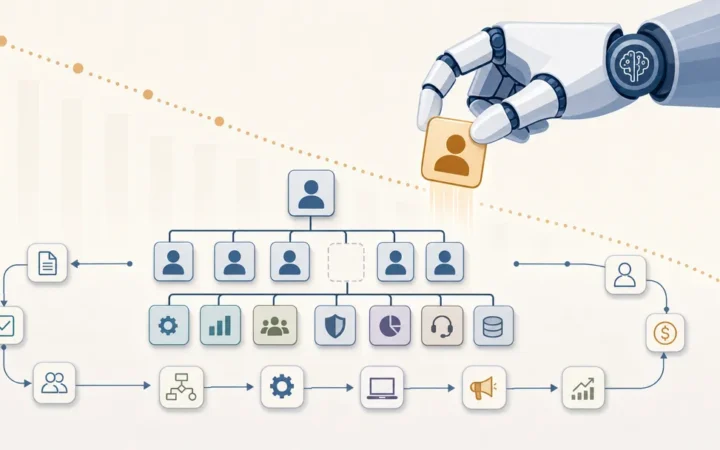
An agent can process 1,000 invoices in an afternoon, flag the ones that need human review, and route them to the right team member. That’s not just faster than a chatbot. That’s a fundamentally different capability. You’re not just replacing repetitive human work, you’re scaling decision-making.
An agent can monitor your systems, detect anomalies, run diagnostics, and escalate to a human only when the situation is beyond its capability envelope. That’s not a helpful assistant. That’s partial automation of infrastructure management.
An agent can engage in multi-turn negotiations with vendors, extract terms, flag deviations from your policy, and present options to your procurement team. That’s sales automation. That’s something chatbots simply cannot do.
Each of those examples requires autonomy. The agent needs to be able to perceive state, make decisions, and execute actions without waiting for human permission on every step.
The Skills Revolution
The reason OpenClaw’s Skills system is important is because it democratizes agent building. You don’t need to understand the underlying model to build an agent. You need to understand your domain and assemble the right skills together.
We’re going to see an explosion of skill libraries. Health care will have Skills for patient record management, compliance checking, and clinical decision support. Finance will have Skills for reconciliation, fraud detection, and regulatory reporting. Real estate will have Skills for property valuation, tenant screening, and lease management.
Once those skill libraries exist and are standardized, building an agent for your industry becomes much simpler. It becomes composition rather than engineering. And that’s when agents move from advanced companies to normal companies.
That’s also when the real transformation happens. Not because agents are smarter. Because they’re finally accessible to teams that understand their domain but don’t have machine learning expertise.
The Security Question Remains
I’ve written about this separately, but it bears repeating: agent architecture introduces security complexity that chatbots didn’t have. An agent with broad permissions is a security risk if it’s compromised. An agent that makes autonomous decisions is harder to audit than a chatbot that waits for human approval.
OpenClaw’s architecture is good, but it’s not a complete security solution. Any organization deploying agents at scale is going to need additional security infrastructure: permission boundaries, decision logging, anomaly detection, human oversight mechanisms.
That’s not an argument against agents. It’s an argument for doing this carefully and deliberately.
What This Means For Your Strategy
The message I want you to hear is: agent-first automation is the next phase of AI adoption. Your competitors are probably thinking about it already, even if they haven’t announced it. And your planning horizon should include agent capability, not just chatbot augmentation.
That doesn’t mean you need to deploy agents tomorrow. But you should understand what they do, where they create value in your industry, and what capabilities you’ll need to build or acquire to make them work safely at scale.
Practical tip: If you’re doing strategic planning for the next year, include a line item for agent readiness. What data would need to be accessible to an agent in your organization? What decisions could be delegated to automated systems? What guardrails would need to exist? The companies asking those questions now will have massive advantages over the companies that ask them in 2027.
The shift from chatbots to agents is real. OpenClaw proved it’s possible to build agents that users want to deploy. The consolidation phase will see major platforms add agent orchestration capabilities. And the competitive pressure phase will see organizations trying to figure out how to use agents effectively while managing the risk.
Be in the group that’s thinking ahead, not the group that’s scrambling to catch up.
Tagged: AI Strategy, Automation

I build automations, AI steps and custom software for businesses with 5 to 200 staff. 120+ projects across 15+ industries, from Middlesbrough.